Design Tokens
What design tokens are and how Flex maps primitive values to semantic tokens.
What is a design token?
In Flex, a design token is a semantic variable that points to a primitive variable. For example, bg/primary in Semantic / Theme points to a colour in Primitive / Colour.
Using tokens instead of raw values has three benefits:
- Several tokens can point to the same primitive.
- Changing a primitive updates every token that points to it.
- A token can point to a different primitive in each mode, so one design can switch theme or breakpoint without being rebuilt.
What are modes?
Modes let a token hold a different value depending on context. Apply a mode to a frame and every token inside it switches to the value for that mode.
Each collection in Flex has its own modes, and they work independently. A single frame can be Large, Dark and German at the same time.
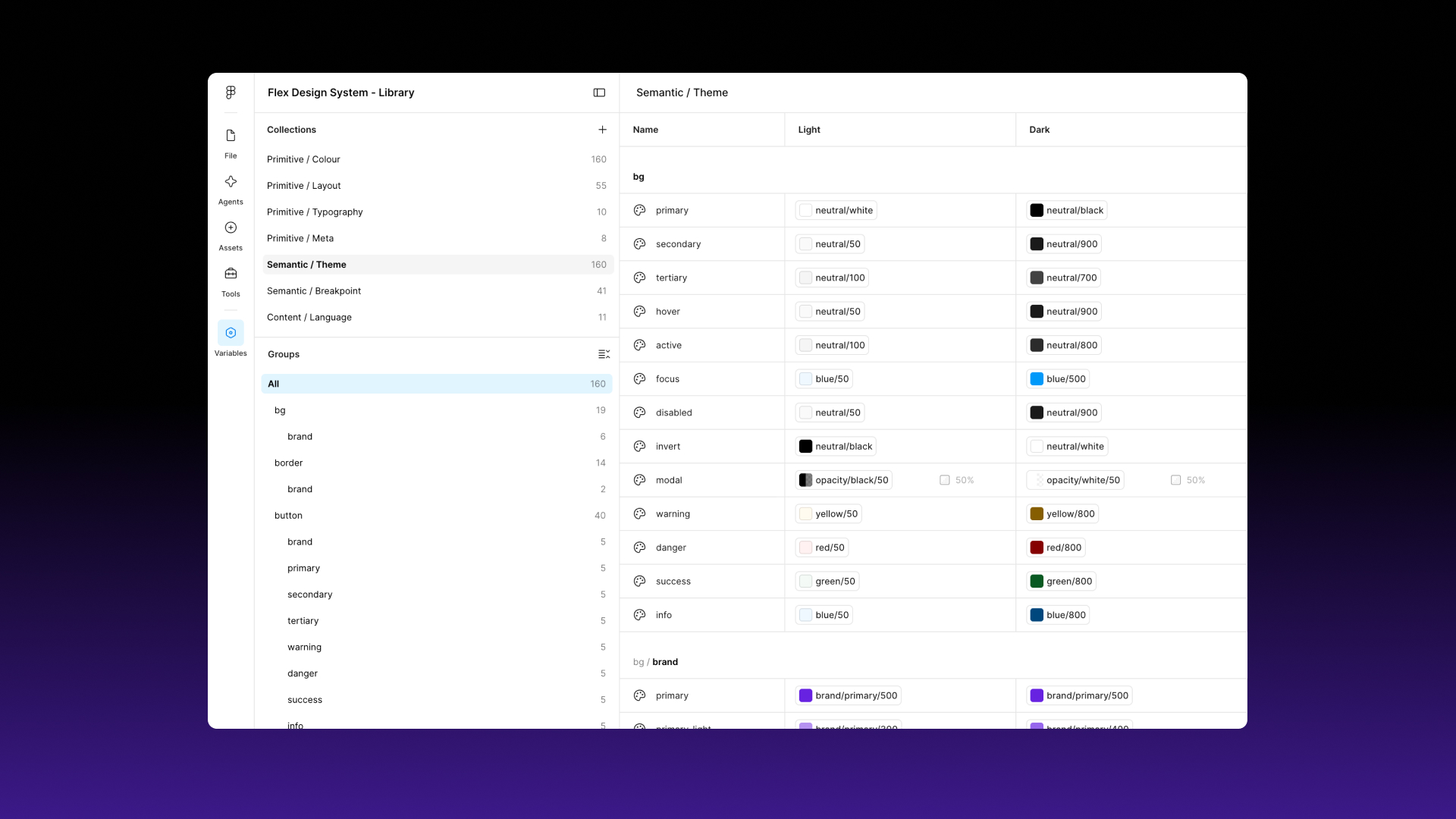
Semantic / Theme
Controls colours, corner radius, font families and font weights.
Modes:
- Light
- Dark
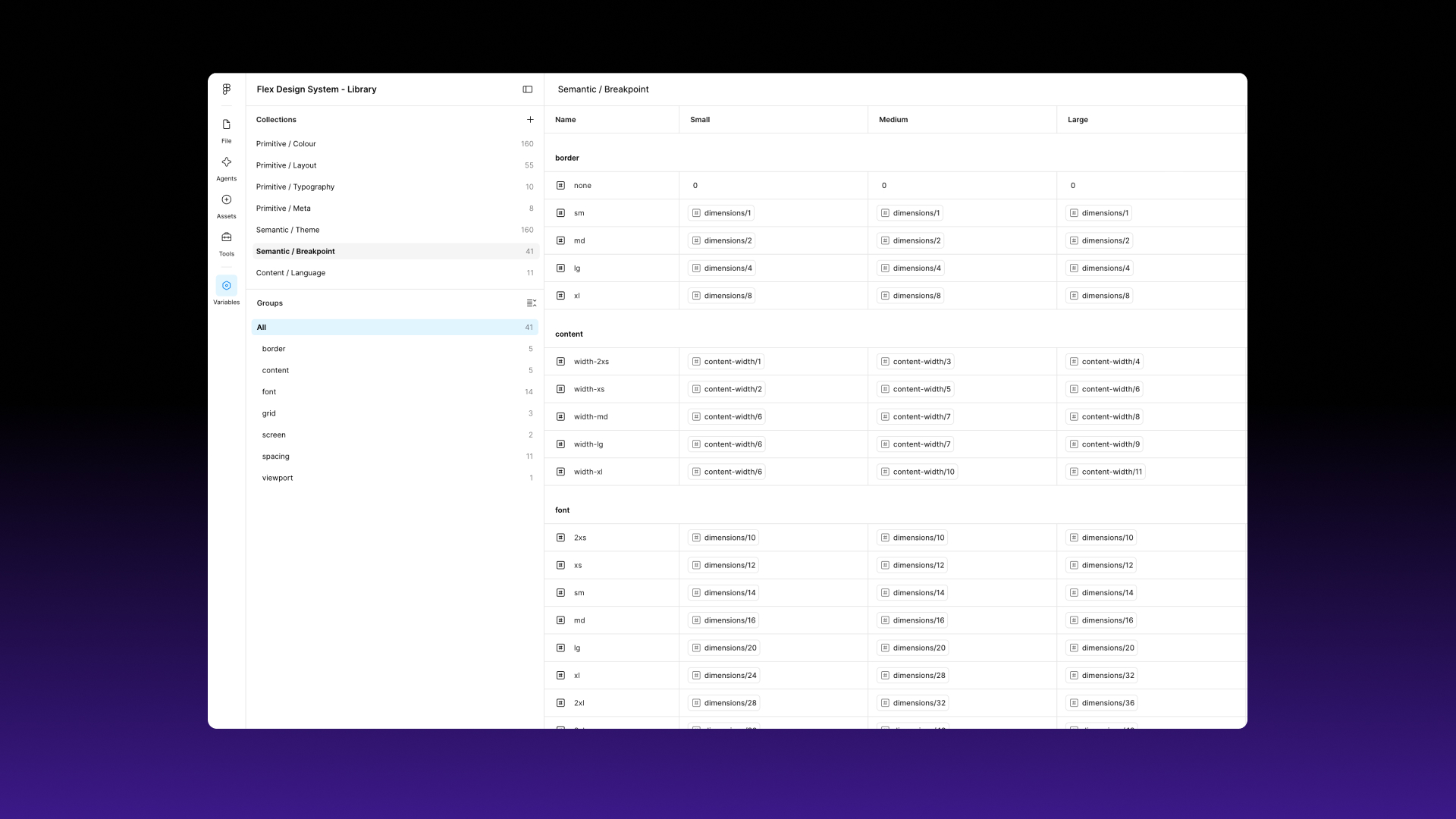
Semantic / Breakpoint
Controls responsive behaviour, such as padding, font size, content width and grid layout changing between mobile and desktop.
Modes:
- Small
- Medium
- Large
The collection also includes variant/breakpoint, a string variable that switches breakpoint-specific component variants automatically. See How to create responsive components in Figma for a walkthrough.
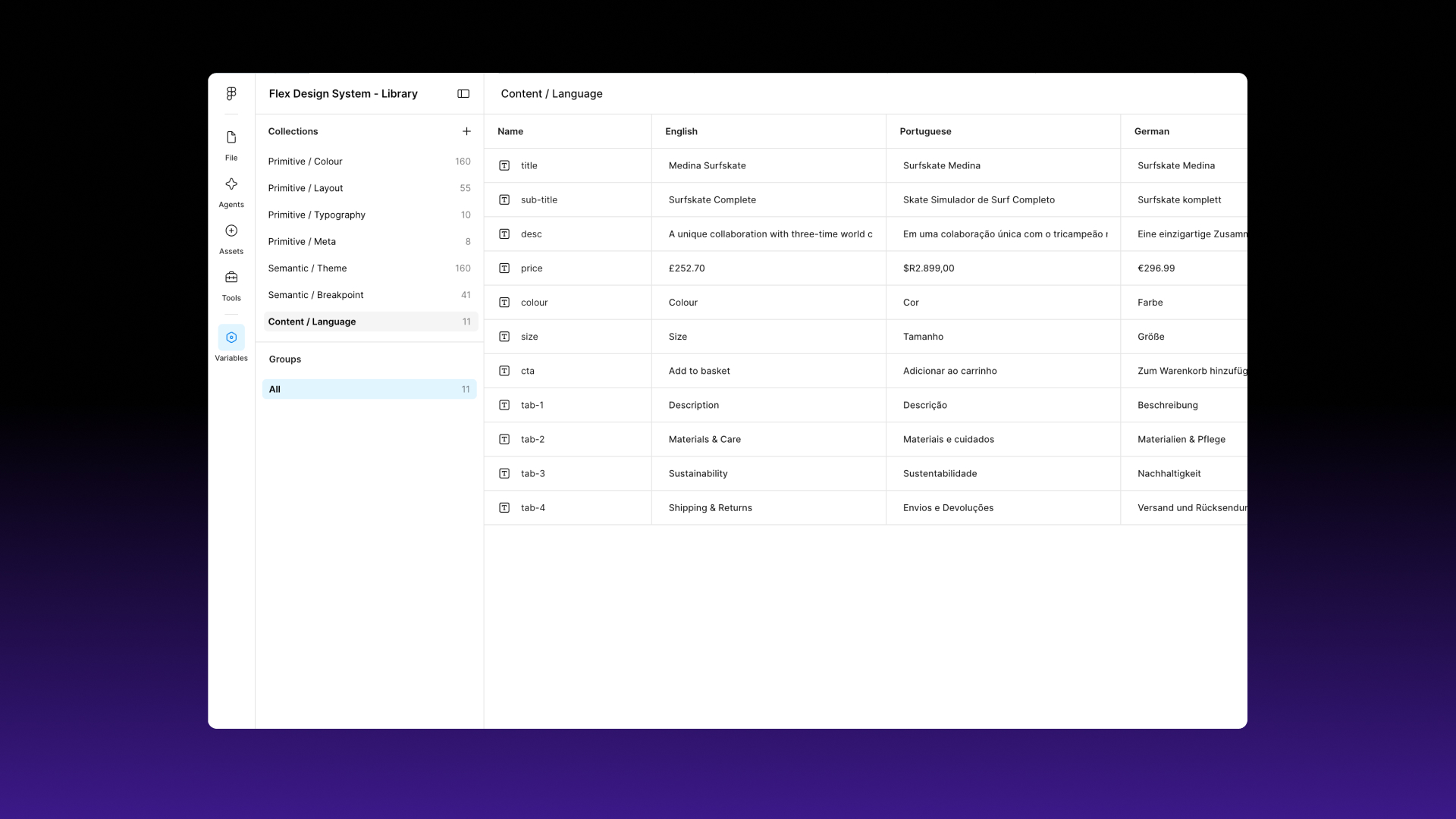
Content / Language
Controls text that needs translating.
Modes:
- English
- Portuguese
- German
- French